







Packaged Wastewater Treatment Plant
Packaged Wastewater Treatment Plant: A Practical Route to Reliable Decentralized Treatment
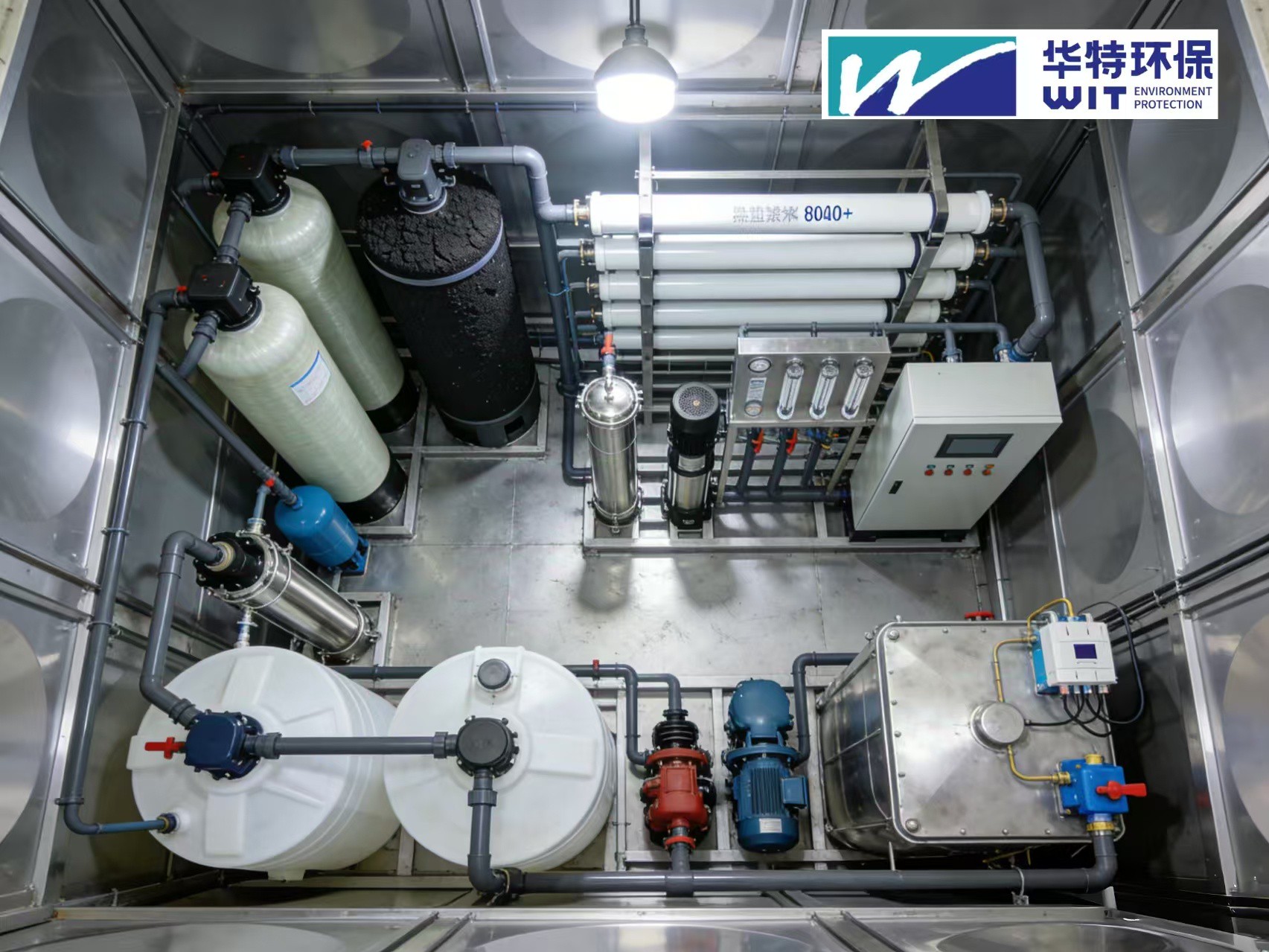
A packaged wastewater treatment plant is often the most sensible answer when wastewater is generated far from a municipal sewer, when a site needs to be commissioned quickly, or when the discharge volume does not justify a large conventional civil works project. It is widely considered for small towns, residential developments, hotels, industrial parks, food-processing sites, aquaculture facilities, construction camps, and remote public infrastructure.
The appeal is straightforward: much of the treatment process can be assembled, tested, and integrated before delivery, reducing on-site construction complexity. But “packaged” should not be confused with “one-size-fits-all.” The tank arrangement may be standardized; the treatment train should not be. Influent quality, daily flow variation, site climate, discharge destination, sludge handling, and operator capability all determine whether a compact system will perform steadily after handover.
Where Packaged Systems Make the Most Sense
Decentralized wastewater projects are rarely simple because the source water is rarely stable. A rural community may see strong morning and evening flow peaks. A factory may discharge intermittently, with cleaning water carrying high organic loads, suspended solids, salts, color, or process chemicals. Aquaculture wastewater can contain solids, nutrients, feed residues, and seasonal changes in water temperature. These differences matter more than the nameplate capacity of the equipment.
A packaged wastewater treatment plant is usually a good fit where footprint is limited and the client needs an integrated process rather than separate civil, mechanical, electrical, and control packages. It can also be useful as an interim treatment facility while a permanent network is being built. In industrial applications, it is sometimes selected as a dedicated pretreatment unit before wastewater enters a centralized treatment plant.
The important distinction is this: compact equipment can shorten deployment, but it does not remove the need for sound process design. If influent conditions are uncertain, an equalization tank, sampling plan, and allowance for process adjustment are often more valuable than simply choosing a larger prefabricated tank.
Treatment Technology Should Follow the Water, Not the Brochure
Most packaged systems combine several familiar unit operations: screening, flow equalization, biological treatment, sedimentation or membrane separation, disinfection, and sludge storage. The final configuration depends on the treatment objective. Wastewater intended for discharge requires a different level of control from water intended for non-potable reuse, and industrial effluent may require chemical pretreatment before biological treatment is even viable.
For domestic-type wastewater, biological processes such as contact oxidation, sequencing batch treatment, or membrane bioreactor configurations may be considered depending on space, effluent requirements, and maintenance resources. For wastewater with heavy solids or oil, physical separation and pretreatment need to be addressed early. For high-strength industrial wastewater, the central question is often biodegradability: if the wastewater inhibits microorganisms or fluctuates sharply, biological treatment alone may become unstable.
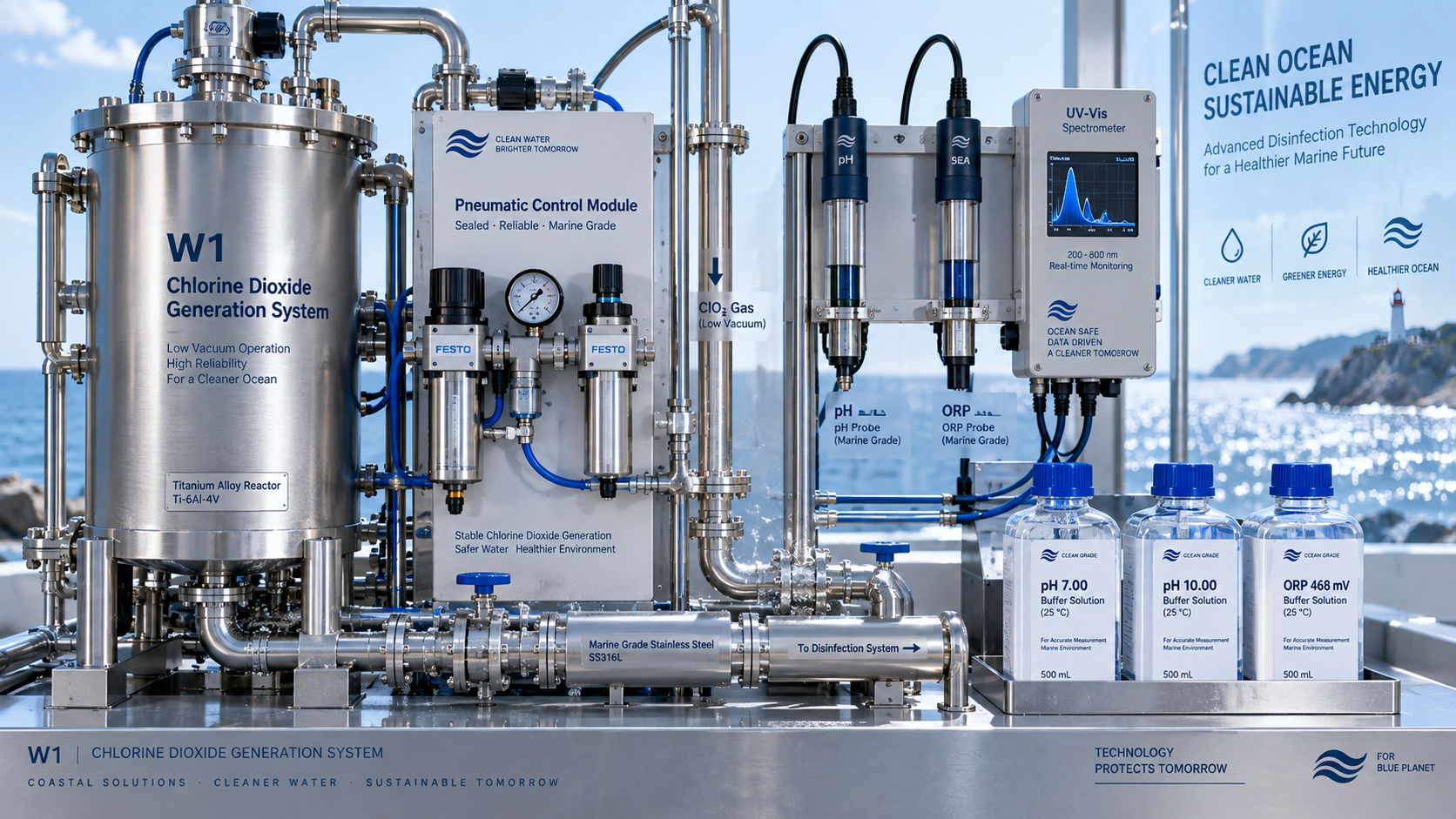
Disinfection also deserves a more careful conversation than it usually receives. Chlorination, ultraviolet treatment, and chlorine dioxide-based approaches each have operating conditions, contact requirements, and safety considerations. Shandong Wit Environmental Protection Technology Co., Ltd., which has long-term engineering experience in municipal, industrial, and aquaculture wastewater treatment, also develops chlorine dioxide production equipment for water treatment and bleaching-related applications. That cross-sector experience is relevant because a disinfection choice should be evaluated alongside upstream solids removal, treated-water clarity, storage time, and the intended use of the final effluent.
What Buyers Commonly Miss During Project Planning
The first mistake is designing from average flow alone. A system may be sized for the expected daily volume but still struggle when a short-duration peak overwhelms pumping, settling, aeration, or filtration. Hourly flow patterns are therefore worth understanding, especially in communities, hotels, restaurants, and plants with batch cleaning operations.
The second is treating influent testing as a formality. A representative sample should reflect actual operations, not just a clean production day. If a site uses detergents, disinfectants, dyes, metal-bearing chemicals, oils, or high-salinity streams, these should be identified before the biological process is selected. It is much easier to include pretreatment at the design stage than to retrofit it after repeated compliance problems.
The third is underestimating operation. Even highly integrated equipment needs routine attention: checking pumps and blowers, monitoring sludge accumulation, confirming chemical dosing where applicable, inspecting membranes or filters, and keeping records of influent and effluent quality. Remote monitoring can help, but it does not replace a responsible operator or a service team that understands the process.
- Confirm the discharge or reuse requirement before selecting the treatment process.
- Review peak flow, not only average daily flow.
- Reserve access space for maintenance, sludge removal, and chemical handling.
- Ask how the system responds to power interruptions, low-temperature periods, and shock loads.
- Clarify whether the supplier’s scope includes installation guidance, commissioning, training, and post-start-up support.
Integration Matters Beyond the Treatment Tank
A wastewater project often touches more than wastewater. A manufacturing site may need reliable process-water supply, reuse-water conditioning, odor control, sludge management, and disinfection within the same environmental program. Looking at these systems separately can create avoidable gaps: one unit produces water that another unit cannot reliably use, or an effluent reuse plan is proposed without confirming the quality demands of the reuse point.
For projects where wastewater treatment is linked with industrial or commercial water supply, Field erected Industrial & Commercial Water Purification Equipment may be considered as part of the broader water-management conversation. The key is not to force every project into an all-in-one package. Separate systems can be more practical when feedwater quality, operating schedules, or maintenance responsibilities differ. What matters is that their water balances, control logic, and quality targets are reviewed together.
This is where whole-process engineering capability has real value. Shandong Wit Environmental Protection Technology Co., Ltd. combines technology development, engineering consulting, and general contracting, with experience spanning wastewater treatment, ecological restoration, constructed wetlands, soil remediation, and water-treatment equipment. For a decentralized project, that broader perspective can help determine whether a packaged plant should stand alone, connect to a constructed wetland polishing stage, include reuse treatment, or be planned as part of a phased regional solution.
Choosing a Supplier: Look Past the Equipment Outline
A useful supplier discussion begins with questions, not promises. Can the supplier explain why a particular process is suitable for the wastewater? What assumptions are being made about loading and fluctuations? Which components are essential for stable operation, and which are optional? How will the plant be commissioned if influent conditions differ from the original estimate?
Technical depth is especially important when the project has industrial characteristics or a challenging discharge target. Companies with research and engineering backgrounds can often provide stronger support in process selection and troubleshooting, provided that the final design remains grounded in site data. Shandong Wit’s cooperation with universities and research institutions, including Shandong University, reflects an approach that connects technology development with practical project delivery rather than treating equipment selection as an isolated purchase.
Before making a final decision, request a clear process description, equipment scope, civil interface requirements, utility consumption assumptions, automation approach, maintenance needs, and commissioning responsibilities. Local discharge rules and acceptance procedures should be checked separately for the actual project location. A packaged wastewater treatment plant works best when it is treated as an operating system—not merely a tank delivered to site.
The strongest projects are usually the ones that spend a little more time defining the wastewater before selecting the hardware. That early discipline helps avoid oversized systems, underperforming biological stages, unnecessary operating expense, and difficult modifications later on.



 What pretreatment requirements must be met before feeding raw water to Large-Scale Integrated Skid-Mounted Water Purification Treatment Equipment?
 What scalability limitations exist for Large-Scale Integrated Skid-Mounted Water Purification Treatment Equipment in phased expansion projects?
 What footprint reduction does Large-Scale Integrated Skid-Mounted Water Purification Treatment Equipment deliver versus conventional concrete plants?
 How ConstantPressure Water Supply Skid-Mounted Equipment avoids water hammer during pump start-up in district heating networks
 chlorine dioxide preparation technology in coastal desalination plants?") What maintenance intervals are validated for W1 type (low negative pressure) chlorine dioxide preparation technology in coastal desalination plants?
What maintenance intervals are validated for W1 type (low negative pressure) chlorine dioxide preparation technology in coastal desalination plants? Does Large-Scale Integrated Skid-Mounted Water Purification Treatment Equipment include redundant control logic for SCADA integration?
GET A FREE QUOTE
Service Commitment: Upon receipt of your message, a dedicated representative will contact you as soon as possible to provide efficient and professional service support.
