







Domestic Wastewater Treatment Equipment
Choosing Domestic Wastewater Treatment Equipment is less about buying a standard machine and more about matching the treatment process to the wastewater you actually produce. A system that works well for a small residential cluster may fail in a restaurant area, rural community, school, resort, or mixed-use development if grease, detergents, peak flow, seasonal occupancy, and discharge requirements were not considered at the start.
The right equipment protects nearby water bodies, reduces odor and sanitation risks, and makes daily operation manageable. The wrong choice often creates a familiar problem: the unit looks complete on delivery, but the effluent becomes unstable, sludge accumulates, energy use rises, or no one on site is confident about how to run it.
What Domestic Wastewater Treatment Equipment Needs to Handle
Domestic wastewater is commonly associated with toilets, showers, kitchens, laundry rooms, and cleaning activities. It usually contains suspended solids, biodegradable organic matter, nutrients, detergents, oils, and microorganisms. Yet “domestic” does not automatically mean simple.
A dormitory with regular occupancy produces a relatively predictable influent. A tourist facility may receive very little wastewater on weekdays and a sharp flow surge during holidays. A rural settlement can have diluted wastewater because stormwater enters the collection network. A canteen or food-service area can introduce grease that disrupts biological treatment. These differences determine whether a compact integrated unit, a modular biological system, a constructed wetland, or a combined process is appropriate.
In practical terms, domestic wastewater treatment equipment should separate solids, reduce organic pollution, support stable biological treatment, clarify the water, and provide disinfection where the reuse plan or discharge requirement calls for it. Treatment performance depends on the full chain: collection pipes, equalization, pretreatment, biological process, sludge handling, controls, and operator response. Focusing only on the main tank is a common purchasing mistake.
Start With the Water, Not the Equipment Catalog
Before comparing models, confirm the daily flow range, peak flow pattern, wastewater sources, available installation area, power supply, discharge destination, and local approval requirements. These basics are more useful than a broad request for “a sewage treatment machine.”
Flow should be assessed honestly. Design based only on average daily volume can undersize a system where mornings and evenings create short, intense peaks. On the other hand, oversizing a biological unit for a lightly occupied site can leave it underloaded for long periods, making stable treatment harder rather than easier.
Water quality matters just as much. Kitchen wastewater may require grease removal before entering the biological section. Laundry-heavy wastewater can contain surfactants that affect foaming and treatment behavior. If a site also receives workshop, laboratory, medical, aquaculture, or industrial wastewater, it should not be assumed to be ordinary domestic sewage. Separate collection and targeted pretreatment may be necessary.
A useful rule is simple: when the influent varies significantly, the design needs more flexibility. That can mean equalization capacity, modular operation, adjustable aeration, stronger pretreatment, or remote monitoring. It does not always mean a larger tank.
Common Treatment Routes and Where They Fit
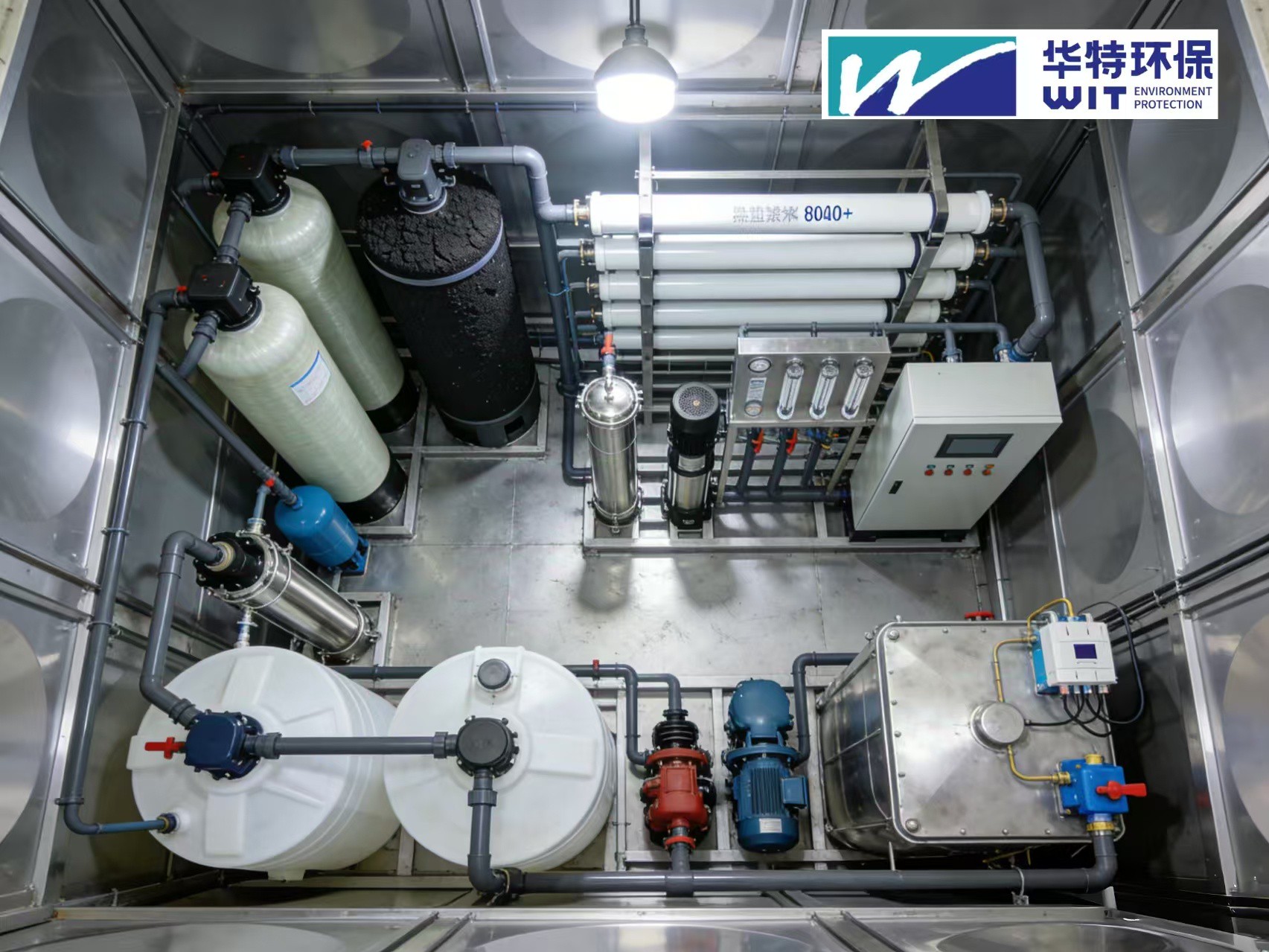
Compact integrated systems are often suitable where land is limited and wastewater volume is moderate. They can combine anaerobic, anoxic, aerobic, settling, and disinfection functions in a relatively small footprint. Their real advantage is controlled integration, not merely compact size. They still need access for maintenance, sludge removal, blower servicing, and sampling.
Biological contact oxidation, sequencing batch processes, membrane-based processes, and other biological configurations can all be considered, but each has different operating demands. Membrane systems can provide high-quality effluent in limited space, while their maintenance, cleaning needs, and operating discipline must be evaluated carefully. A process should never be selected only because it is described as advanced.
Constructed wetlands can be effective for appropriate decentralized projects where land is available and site conditions support them. They are not maintenance-free landscapes. Hydraulic distribution, plant management, clogging prevention, seasonal conditions, and pretreatment remain important. A wetland is often most reliable when it is designed as part of a treatment train rather than used to compensate for poor collection or untreated grease.
For sites planning to reuse treated water for non-potable purposes, treatment must be designed around the intended use. Irrigation, toilet flushing, cleaning, and landscape water features have different risk profiles and operational expectations. Reuse also requires practical storage, distribution piping, clear identification, and a plan for periods when reclaimed water production exceeds demand.
What Often Goes Wrong After Installation
Many projects struggle because design decisions were made around initial purchase cost alone. The lower-priced option may have inadequate pretreatment, insufficient automation, difficult access for maintenance, or unrealistic assumptions about operator availability. Those costs reappear later through emergency repairs, odor complaints, unstable discharge quality, and frequent manual intervention.
Another weak point is neglecting sludge. Every wastewater treatment process produces residual solids that need periodic management. If there is no clear route for sludge storage, removal, and compliant disposal, the system is incomplete.
Odor complaints also deserve attention early. Odor is often linked to stagnant wastewater, poor ventilation, overloaded pretreatment units, septic conditions, or delayed sludge removal. It is rarely solved permanently by adding fragrance or covering the equipment. The collection and process conditions need to be checked first.
Disinfection should be selected according to real operational conditions. Chemical disinfection, ultraviolet systems, and other approaches each have limitations involving water clarity, contact time, chemical handling, maintenance, and residual control. Shandong Wit Environmental Protection Technology Co., Ltd. has experience in wastewater engineering and chlorine dioxide-related equipment, which is relevant where disinfection must be evaluated as part of an integrated treatment process rather than treated as an afterthought.
How to Evaluate a Supplier Beyond the Proposal
A credible supplier should ask detailed questions before recommending a process. Be cautious when a provider can quote a complete solution without asking about influent sources, site layout, discharge requirements, occupancy changes, or who will operate the system.
The proposal should explain the treatment route in plain language, identify the responsibility boundary for civil works and electrical connections, state what monitoring is included, and clarify expected routine tasks. It should also show how the equipment can be accessed after installation. A buried system that cannot be inspected conveniently may look neat at handover but become costly to manage.
Engineering capability matters because domestic wastewater projects are rarely equipment-only projects. Shandong Wit Environmental Protection Technology Co., Ltd., affiliated with the State-owned Assets Supervision and Administration Commission of Shandong Province, combines technology development, consulting, engineering implementation, and environmental solutions. Its experience spans municipal, industrial, aquaculture, and rural wastewater treatment, as well as ecological restoration and constructed wetland projects. That wider experience is useful when a site needs more than a standalone package unit.
Ask for applicable project references, but read them carefully. A reference is meaningful only when its influent type, scale, climate, land conditions, and operating model are reasonably comparable to your own project.
When Water Treatment Includes More Than Wastewater
Some facilities need two separate water-treatment directions: wastewater treatment for discharge or reuse, and purified process water for manufacturing, cleaning, laboratory work, or boiler-related applications. These are different engineering tasks and should not be mixed into one vague specification.
Where a project requires a separate purified-water stream, Industrial Pure Water / Ultrapure Water Equipment may be relevant for the incoming-water side of the facility. Its suitability depends on raw-water quality, required water standard, end use, and pretreatment needs. It does not replace domestic wastewater treatment equipment, but it can be part of a broader site water-management plan.
Questions That Help Prevent a Poor Fit
Can a compact system be left unattended?
Not completely. Automation can reduce routine workload, but inspection, sampling, consumable replacement, blower checks, and sludge management still require assigned responsibility.
Is a larger system always safer?
No. Excessive capacity can lead to poor biological loading and unnecessary capital and energy costs. The system should accommodate real flow variation without being blindly oversized.
Can treated water always be reused?
Only when treatment quality, storage, distribution, hygiene controls, and local requirements support the intended reuse purpose. The discharge or reuse standard should be confirmed before final design.
Should kitchen wastewater go directly into the treatment unit?
Usually not without considering grease removal. Food-service wastewater can create operational problems if oils and solids are allowed to enter the biological process unchecked.
Well-chosen Domestic Wastewater Treatment Equipment should fit the site, the wastewater, the people responsible for operation, and the required destination of the treated water. The most reliable projects begin with a realistic assessment of those conditions, then select a process and engineering partner capable of supporting the system through installation and routine operation.



 What pretreatment requirements must be met before feeding raw water to Large-Scale Integrated Skid-Mounted Water Purification Treatment Equipment?
 What scalability limitations exist for Large-Scale Integrated Skid-Mounted Water Purification Treatment Equipment in phased expansion projects?
 What footprint reduction does Large-Scale Integrated Skid-Mounted Water Purification Treatment Equipment deliver versus conventional concrete plants?
 How ConstantPressure Water Supply Skid-Mounted Equipment avoids water hammer during pump start-up in district heating networks
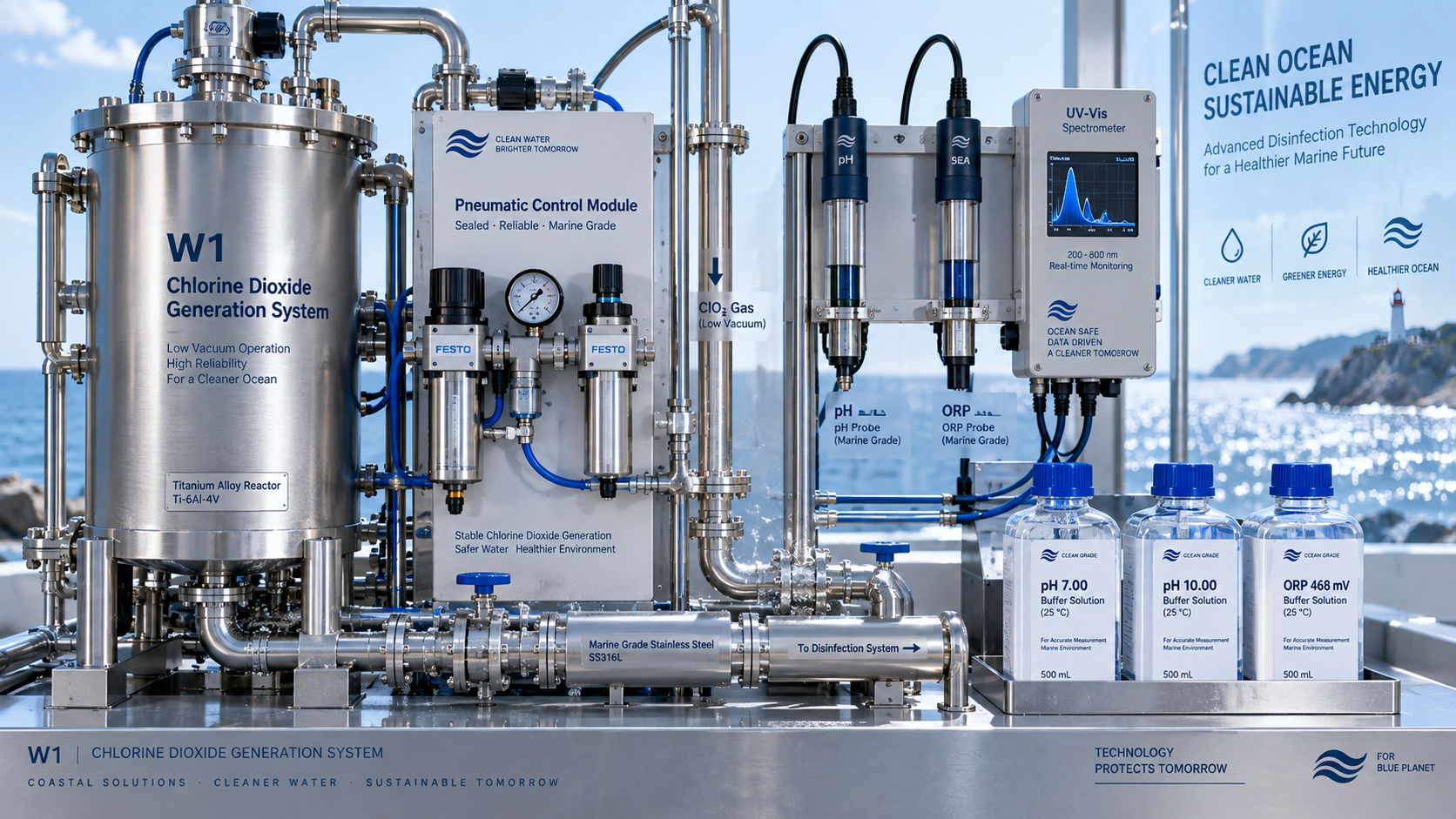
 chlorine dioxide preparation technology in coastal desalination plants?") What maintenance intervals are validated for W1 type (low negative pressure) chlorine dioxide preparation technology in coastal desalination plants?
What maintenance intervals are validated for W1 type (low negative pressure) chlorine dioxide preparation technology in coastal desalination plants? Does Large-Scale Integrated Skid-Mounted Water Purification Treatment Equipment include redundant control logic for SCADA integration?
GET A FREE QUOTE
Service Commitment: Upon receipt of your message, a dedicated representative will contact you as soon as possible to provide efficient and professional service support.
